
Cast of Characters, The Lady in Blue - Javier Sierra
Historical figures play crucial roles in this work of fiction. The following is a succinct biography of the novel's central characters, in the hope that they will stimulate the curiosity of those readers who have already intuited that The Lady in Blue is much more than a work of fiction.
When a date is proceeded by a “c.”; (an abbreviation of the Latin circa), it means that the dating is approximate. In some cases, even provisional information on a character's actual birth and death is unavailable.
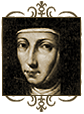

Her secular name was María Coronel y Arana. From an early age she possessed a mysterious, introverted and highly intelligent personality. To more than a few of her biographers she seemed to enjoy what was called “inspired learning”, which is another way of saying that she had knowledge of subjects she had never studied.
When she was only thirteen years old, her parents transformed the family home into a convent. Her mother encouraged her to become a nun, and at sixteen she accepted her destiny. Her mystical experiences began in 1625, when she was twenty three years old. She bilocated, levitated in front of the other nuns, and participated in many kinds of “manifestations” or supernatural phenomena; this period is coterminous with her mysterious evangelization in America. Shortly thereafter, when she turned twenty-five she was chosen Prioress; granted a special dispensation by the Pope, she wrote a life of the Virgin, The Mystical City of God, and began an intense correspondence with Philip IV, the King of Spain. Although her story remains little known, she was doubtless one of the most compelling personalities of Spain's Golden Age.


This character was actually created as a way of giving the reader some idea of the incredible events that took place when I was in the process of documenting the Lady in Blue. He is, in some ways, my alter ego. The haphazard manner with which Carlos stumbled upon María Jesús de Ágreda's village, as depicted early in the novel, was something I experienced first hand, and which profoundly affected me.
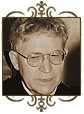

Although the character is fictional, it is inspired by the Benedictine priest and exorcist Pellegrino Ernetti (1925-1994), a Venetian professor of prepoliphany. In May of 1972, Ernetti gave a polemical interview to the Italian news magazine DomenicadellaCorriere in which he confessed to having worked on the construction of a machine, known as Chronovisori, capable of photographing the past. I was, in fact, able to interview him at the monastery San Giorgio Maggiore, in Venice, a year before his death. What I learned in that interview inspired major portions of this novel.


Born on an indeterminate date on the island of San Miguel in the Azores, he was ordained as a priest in 1598 in Mexico. In October, 1623, he was placed in charge of the New Mexico region, which was at that time known as the Guardianship of Saint Paul. Sometime around 1630, when he was relieved by Fray Esteban de Perea, he had successfully converted 80,000 Indians. After writing his celebrated Memorial for Philip IV, he visited Ágreda in order to interview MaríaJesús and clarify her involvement in the apparitions of the Lady in Blue in America. The 30th of April 1631 marked the beginning of a series of encounters between the two that stretched over the course of two weeks. Fray Alonso was later appointed Auxiliary Bishop of Goa in what was then the Portuguese Indies, but he died during the course of the voyage to his destination.
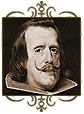

MaríaJesúsdeÁgreda's bilocations took place during his reign. In Julio of 1643, Philip himself visited the convent at the foot of the Moncayo Sierra in Soria, and met with the Lady in Blue for the first time. Six days later the two began a correspondence that lasted until 1665. While there is no definitive proof, it was probably through the mediation of the King that the Franciscans finally identified the Lady in Blue, as described by the Indians of New Mexico, with the nun from Ágreda. It was also on his orders that the padre Benavides' Memorial was printed at the Royal Printing House in Madrid, in 1630. Philip IV had a great appreciation of sor María Jesús de Ágreda and his letters to her reveal more about the personality of the monarch than any other document of the time.

Archbishop of Mexico between 1629 and 1634, and the man who put Esteban de Perea in charge of investigating the nature of the apparitions of the Lady in Blue in New Mexico.

Reader in Theology at the Convent of Saint Francis in Pamplona and Provincial Administrator of the Order in Burgos, he was the first member of a religious order to question María Jesús de Ágreda about her “supernatural voyages” to what is now the southwest United States. Drawing on these conversations, he wrote a letter to the Archbishop of Mexico, sometime around 1627, to inform him of her visions.
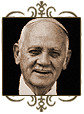

An audio engineer who began to take an interest in what was called Out of Body Experiences (OBE) or extra-corporeal experiences when he himself underwent an “astral split” in 1958. After discounting the various possibilities that he was suffering from a cerebral tumor, hallucinations or an early warning of the onset of imminent mental illness, he began to take a closer look at his situation. He came to the conclusion that the experience, and others that would come later, were produced when his brain “synthesized” a particular sound frequency. In 1974 he founded the Monroe Institute, in Virginia, in order perform his first investigations under one roof and to develop the Hemy-Sync technology, which allowed him to stimulate the brain through sound in order to provoke “astral voyages” at will.

Franciscan monk born in Villanueva del Fresno (Badajoz), on the border with Portugal. The son of a distinguished family, he undertook a rapid rise in the ecclesiastical hierarchy. At the beginning of the seventeenth century, he was charged with carrying out the inquisition in New Mexico, the region where he had served as Guardian on two occasions in 1616 and 1629.

Franciscan missionary who in August of 1629 founded the San Bernardino mission in Hopi territory. On that voyage he was accompanied by the friars Andrés Gutiérrez, Cristóbal de la Concepción y Francisco de San Buenaventura. He died on June 28, 1633, poisoned by “medicine men” at the Awatovi mission.

Franciscan Missionary from Salamanca, Spain.
In 1622 he founded the San Antonio mission, in the part of New Mexico today known as the Isleta Pueblo. He administered the Pueblo until the June 1629 arrival of Padre Esteban de Perea, who ordered him to undertake a journey to La Gran Quivira in order to investigate the apparitions of the Lady in Blue.

From Burgos, Spain. For twenty four years, his “great labor,” as he put it, was to be sor María de Ágreda's first confessor. Philip IV intended to make him a bishop but he refused the privilege in order to be remain in close proximity to the nun. He spent his last years at the monastery San Julián de Ágreda.
The New Mexican magazine

